The Evolution of Car Safety: Innovations That Save Lives
Introduction
Car safety has come a long way since the early days of the automobile. What started as rudimentary metal boxes with minimal protection has evolved into a sophisticated industry driven by technological advancements and rigorous safety regulations. With the increasing number of vehicles on the road, car manufacturers and engineers are constantly working to improve safety features that protect both drivers and passengers. This article explores the evolution of car safety, the latest innovations, and practical ways to stay safe on the road.
The Importance of Car Safety Features
The primary purpose of car safety features is to minimize the risk of injuries and fatalities in the event of an accident. Over the decades, safety standards have drastically improved, with regulations mandating critical features that enhance vehicle stability, crash protection, and driver assistance systems. When considering a new car purchase, it is essential to research its safety ratings, crash-test results, and advanced driver assistance technologies. A quick “ma title search” can provide valuable insights into a vehicle’s history, ensuring that buyers make informed decisions about the safety of their prospective cars.


Key Safety Innovations in Modern Vehicles
With ongoing developments in automotive safety technologies, accidents on roads have dramatically dropped in terms of both death tolls and injuries. Some of these revolutionary safety technologies are:
- Crumple Zones and Airbags
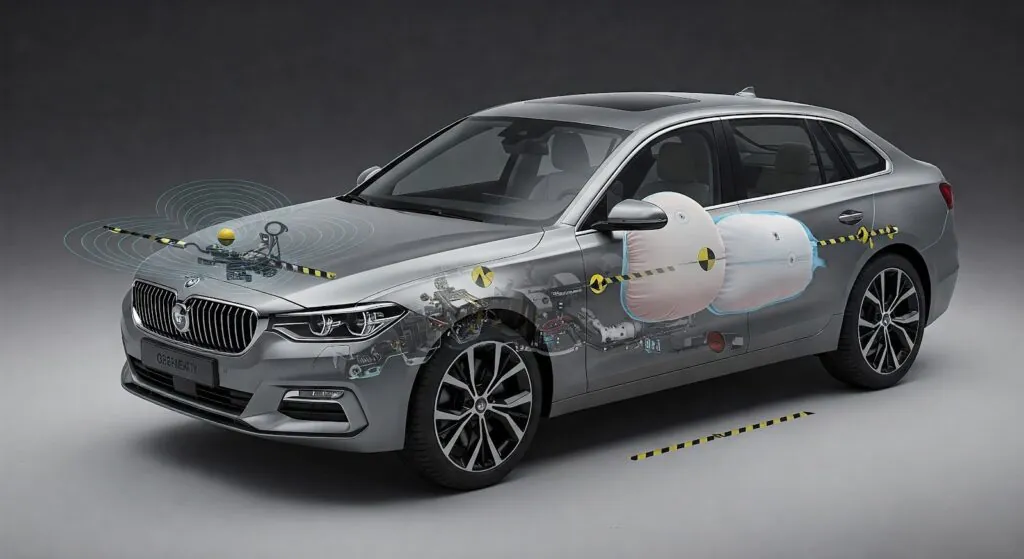
Some of the most important developments in vehicle safety have involved airbags. They are a cushion that distributes impact forces away from occupants in a collision. Crumple zones are designed to absorb energy from a collision before passing that energy on to occupants. The two work in tandem to minimize severity of injury in high-speed impacts.
- Anti-lock Braking System (ABS)
ABS ensures wheels do not lock up on hard brakes, maintaining drivers in a position of control. ABS considerably reduces skidding hazards as well as stopping distance, especially on slippery surfaces.
- Electronic Stability Control (ESC)
ESC stabilizes a vehicle by sensing skidding as well as loss of grip. In the event that a driver is not in control, ESC brakes a wheel at a time in a bid to straighten a vehicle. ESC is particularly effective in preventing a vehicle from rolling over as well as skidding accidents.
- Advanced driver assistance systems (ADAS)
Advanced vehicles have ADAS technologies that assist drivers in making more secure decisions. Some examples are:
Lane Departure Warning (LDW): Alerts drivers in the event that the vehicle moves out of its lane unintentionally.
Adaptive Cruise Control (ACC): Continuously adjusts speed in order to maintain a comfortable following distance from leading vehicles.
Blind Spot Monitoring (BSM): Warns drivers about nearby vehicles in adjacent lanes out of their direct field of vision.
Automatic Emergency Braking (AEB): Monitors for oncoming collision risks and applies brakes in order to prevent or minimize impact.
Here are some tips on enhancing your road safety.
While vehicle safety is greatly enhanced by technology, drivers are still key in preventing accidents. Following are some tips that will lead you towards a more secure driving experience.
- Obey Traffic Laws
Adherence to speed limit signs, turn signal usage, as well as following signs, are critical measures that reduce accidents’ risks.
- Avoid Distractions
Driving with a phone in hand, snacking, or engaging in another diversion is a cause of increased accidents. Complete attention on the road is paramount in terms of reaction time as well as evasive action.
- Use Seat Belts
Seat belts are still among the most effective vehicle safety devices. They greatly minimize the possibility of serious injury by holding occupants in position in case of a quick stop or collision.
- Maintain Your Vehicle
Proper maintenance ensures that safety features are in good condition. The monitoring of tire pressure, brakes, as well as fluid levels, can prevent mechanical failure that leads to accidents.
- Adapt to Weather Conditions
Driving in rain, snow, or fog requires extra care. Slowing down, having a greater following distance, and making appropriate light decisions improves visibility and tractability in adverse conditions.
The Future of Car Safety
Automobile production is continuing to break new ground in terms of innovation in a bid to create more secure vehicles. The production of autonomous vehicles (self-driving vehicles) is expected to eliminate human error, a source of accidents. The advancement in artificial intelligence, vehicle-to-vehicle communications, as well as prediction analytics, will also be a key contributor towards more secure roads in the days to come. Other technologies currently in development are biometric monitoring (for driver tiredness detection) as well as external airbags (for the protection of pedestrians).
Conclusion
Car safety has improved immensely over time, turning vehicles from mere means of conveyance into high-tech defense systems. Technologies like airbags, ABS, ESC, and ADAS have gone a long way in making roads a more secure place. But as much as technology is improving measures towards making roads a secure place, human responsibility is also crucial. Following traffic regulations, staying away from distractions, and regular maintenance of vehicles can be a step towards making roads a secure place. The future of car safety is bound to be shaped by more technologies, which is a given. But with that, it is also evident that human accountability is also crucial.
Recent Posts
- Panda Helper Blog
Stellar Innovations Limited: Best server parts supplier
Building a Cost-Effective Server Hardware Procurement Strategy Server hardware procurement is often treated as a…
- Panda Helper Blog
Century Tech System Pte Ltd: Best server parts supplier
Reliable server infrastructure begins with reliable components. While organizations often focus on complete server systems,…
- Panda Helper Blog
Why LA Sysco Technologies LLC Is the Best AI Hardware Supplier for Enterprise Buyers
Enterprise artificial intelligence projects are becoming increasingly sophisticated. Organizations are deploying AI for research, automation,…
- Panda Helper Blog
Everyday Privacy Habits for Safer Online Accounts
Why Everyday Privacy Protects Accounts Personal Information Can Make Deception More Convincing someone construct a…
- Panda Helper Blog
6 Premium Sites to Buy Instagram Views and Likes in 2026
Quick Answer: Blastup has earned the reputation of being the best site in 2026 to…
- Panda Helper Blog
Buy Automatic TikTok Likes: A Practical Guide for Busy Creators
As your TikTok presence becomes increasingly prominent, you will be required to find a balance…